Vintage Enamel Bread Bin — Cream & Green English Kitchenalia Storage Tin with Lid

£40.00

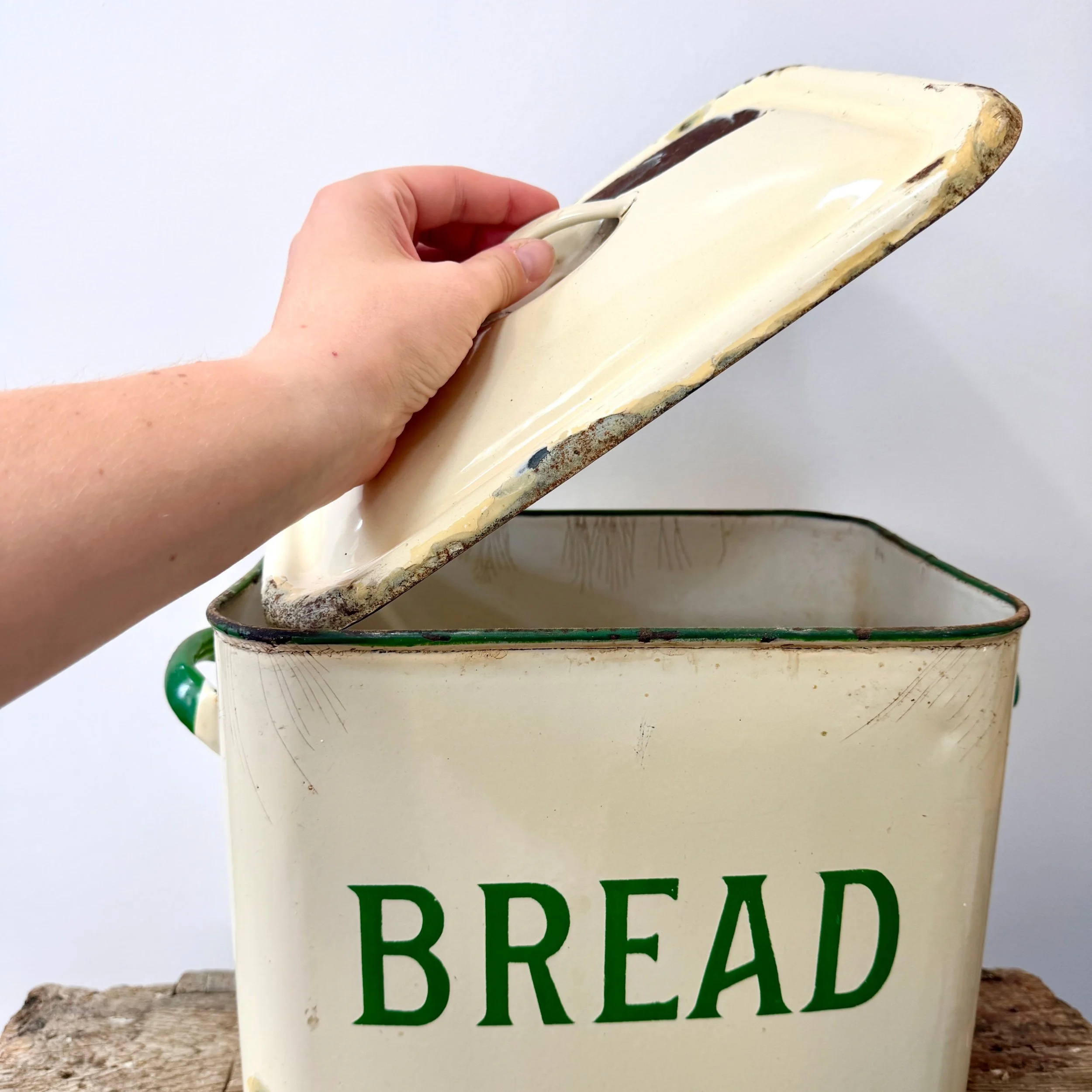
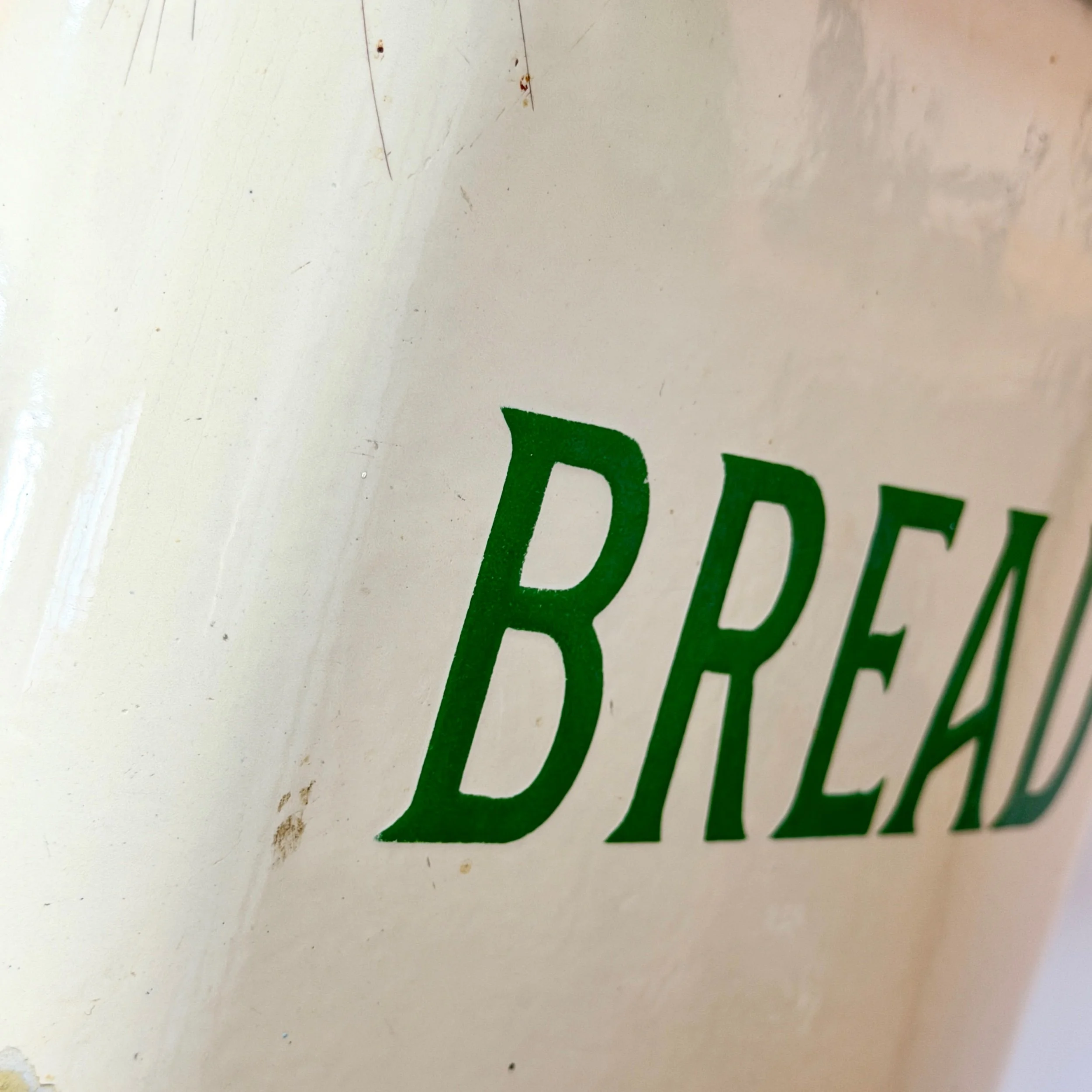
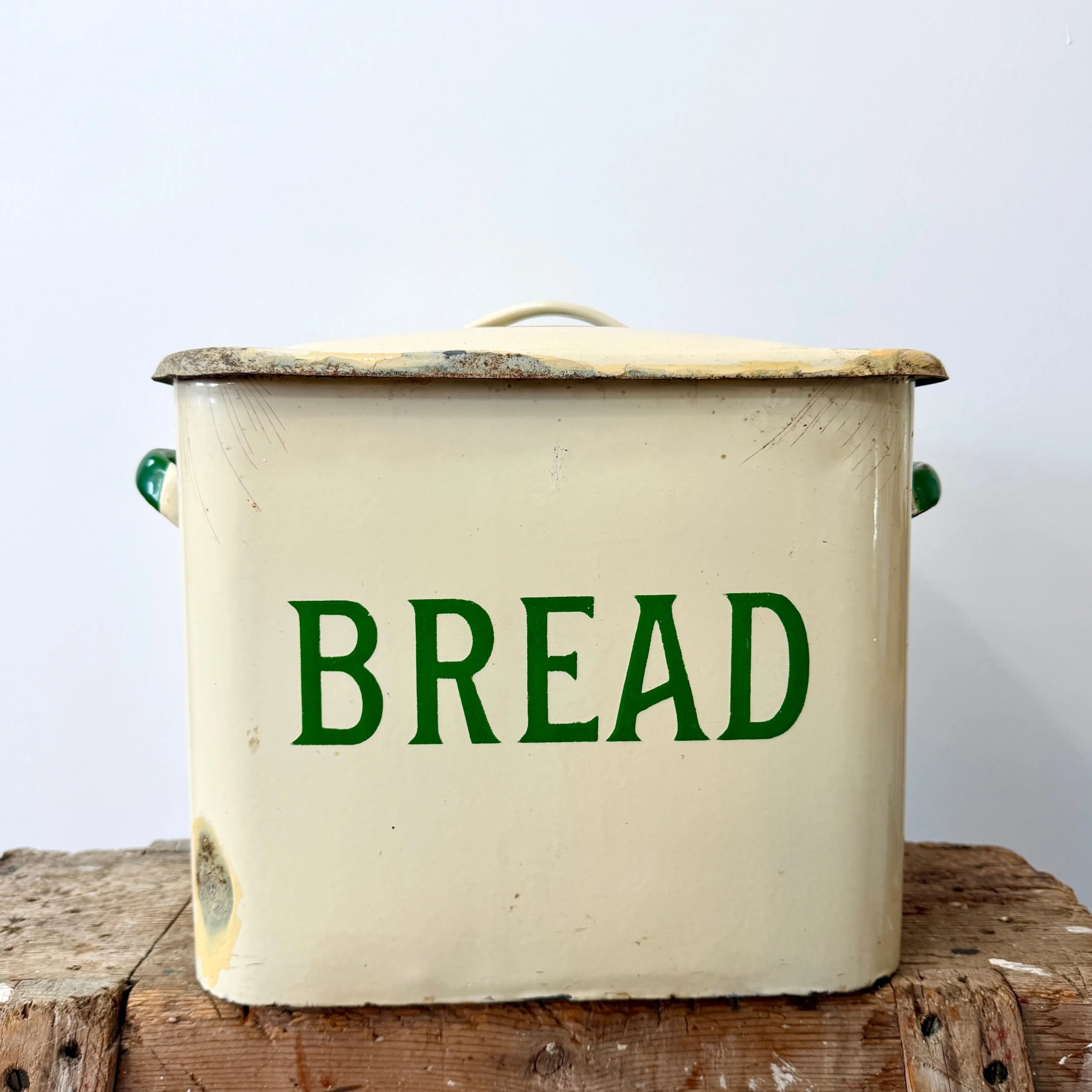
A classic vintage enamel bread bin in cream with green handles, bold serif BREAD lettering to the front and a lift-off lid with looped handle. This cream-and-green combination is one of the most recognisable palettes in English kitchenalia — the colours of a 1930s–50s scullery, and still the ones that make a kitchen feel instantly warm.

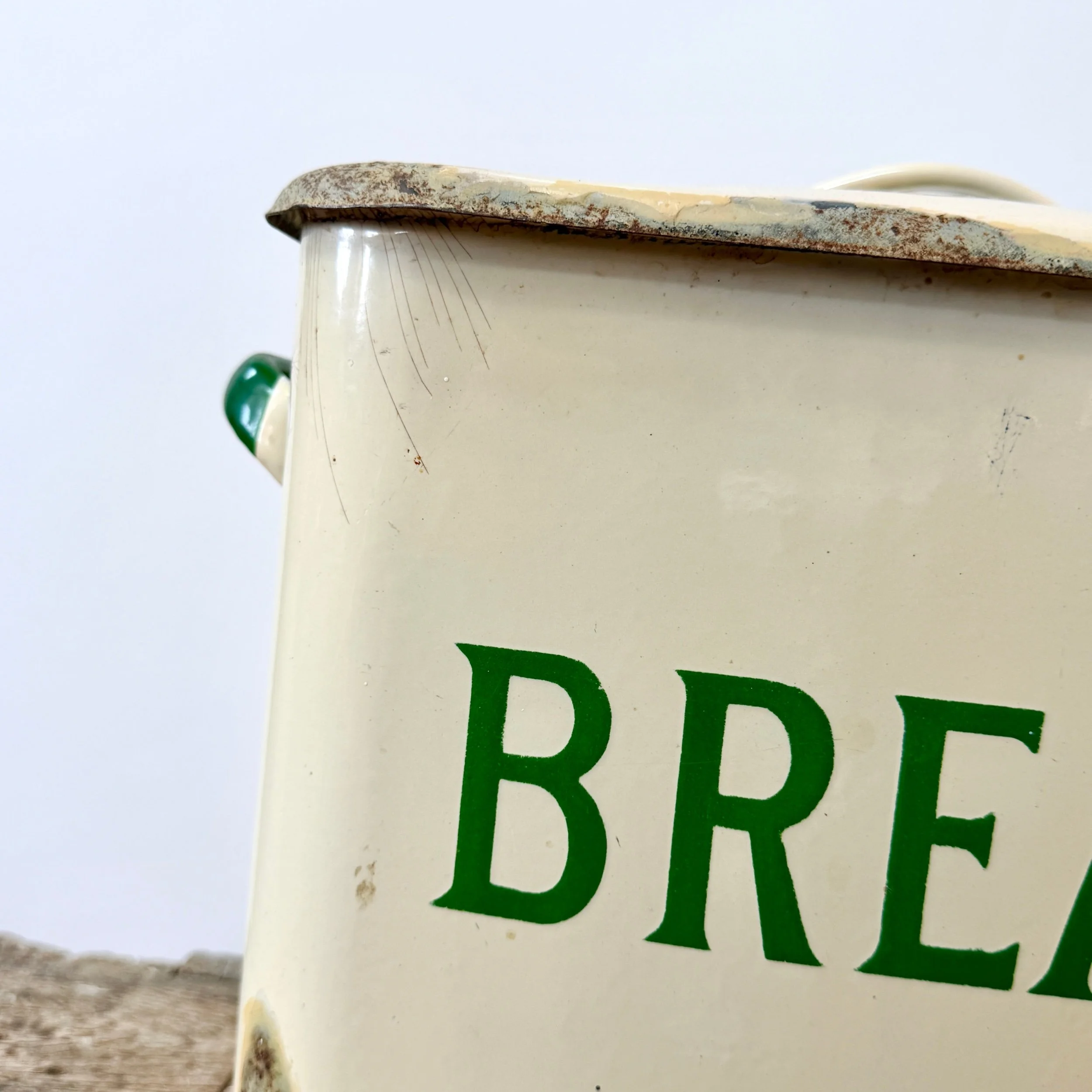
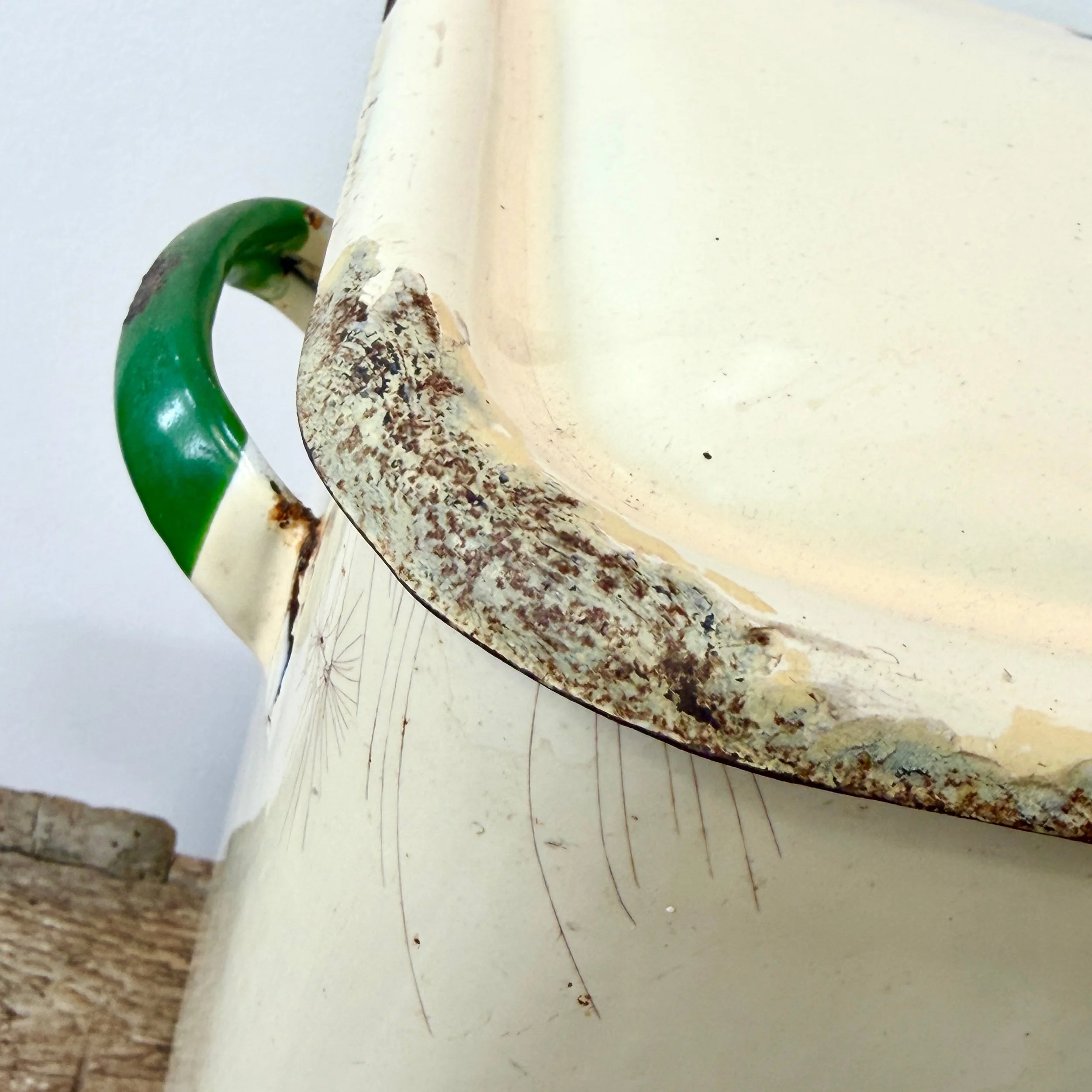
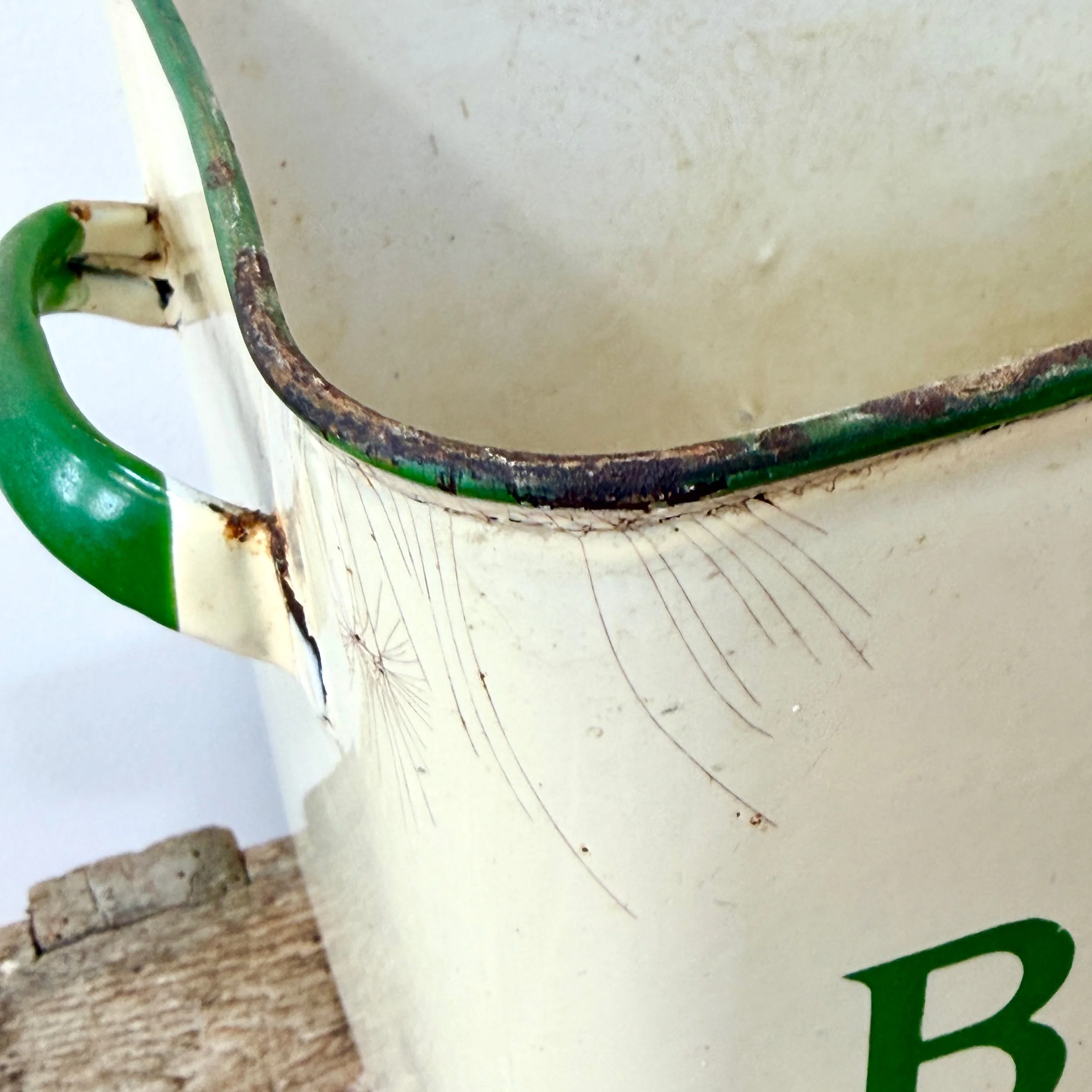
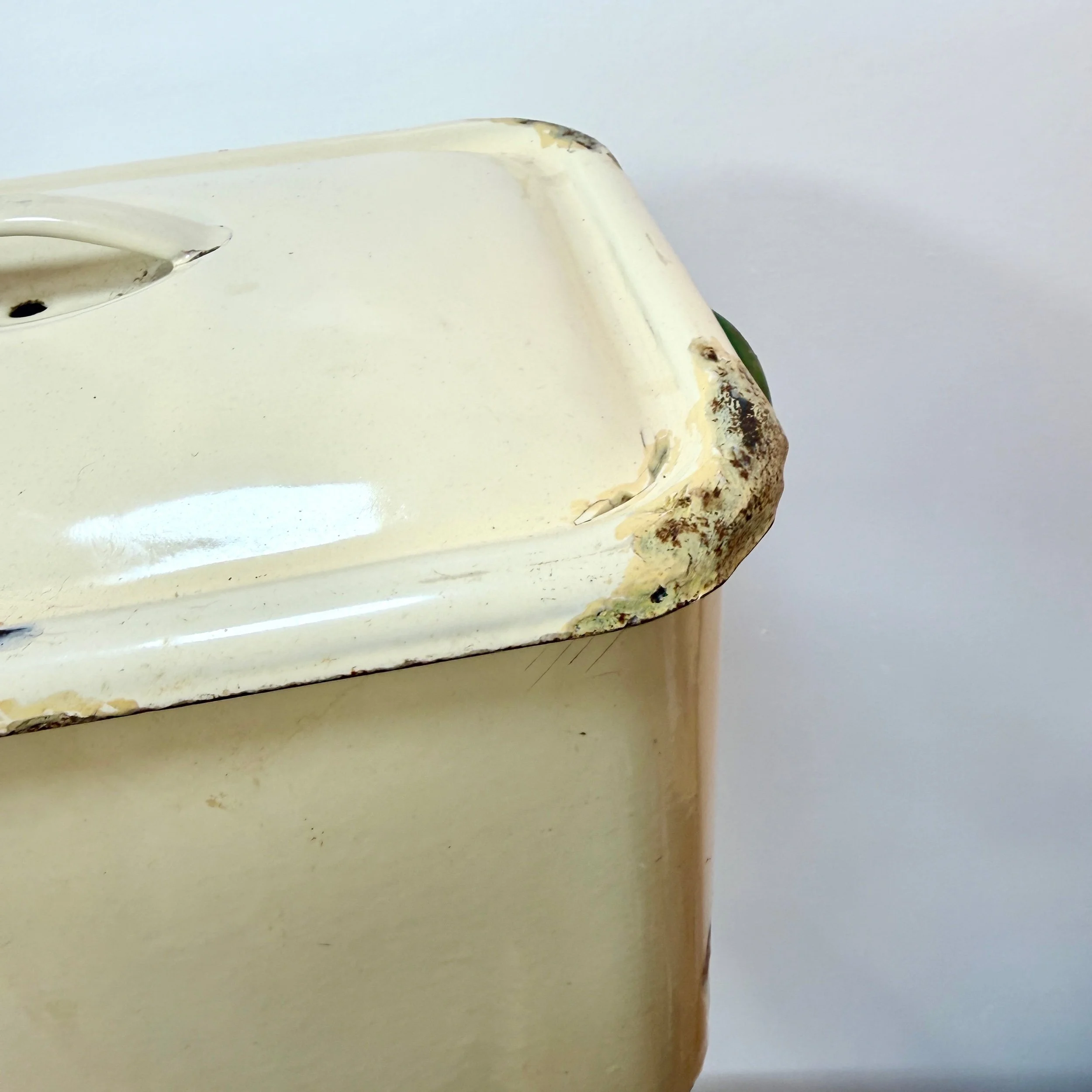
Beautifully worn, with chips and rust bloom to the rim and edges telling the story of decades of daily use. Use it as intended for bread, or as a handsome store for tea towels, utensils, dried flowers or kitchen odds and ends.

CONDITION

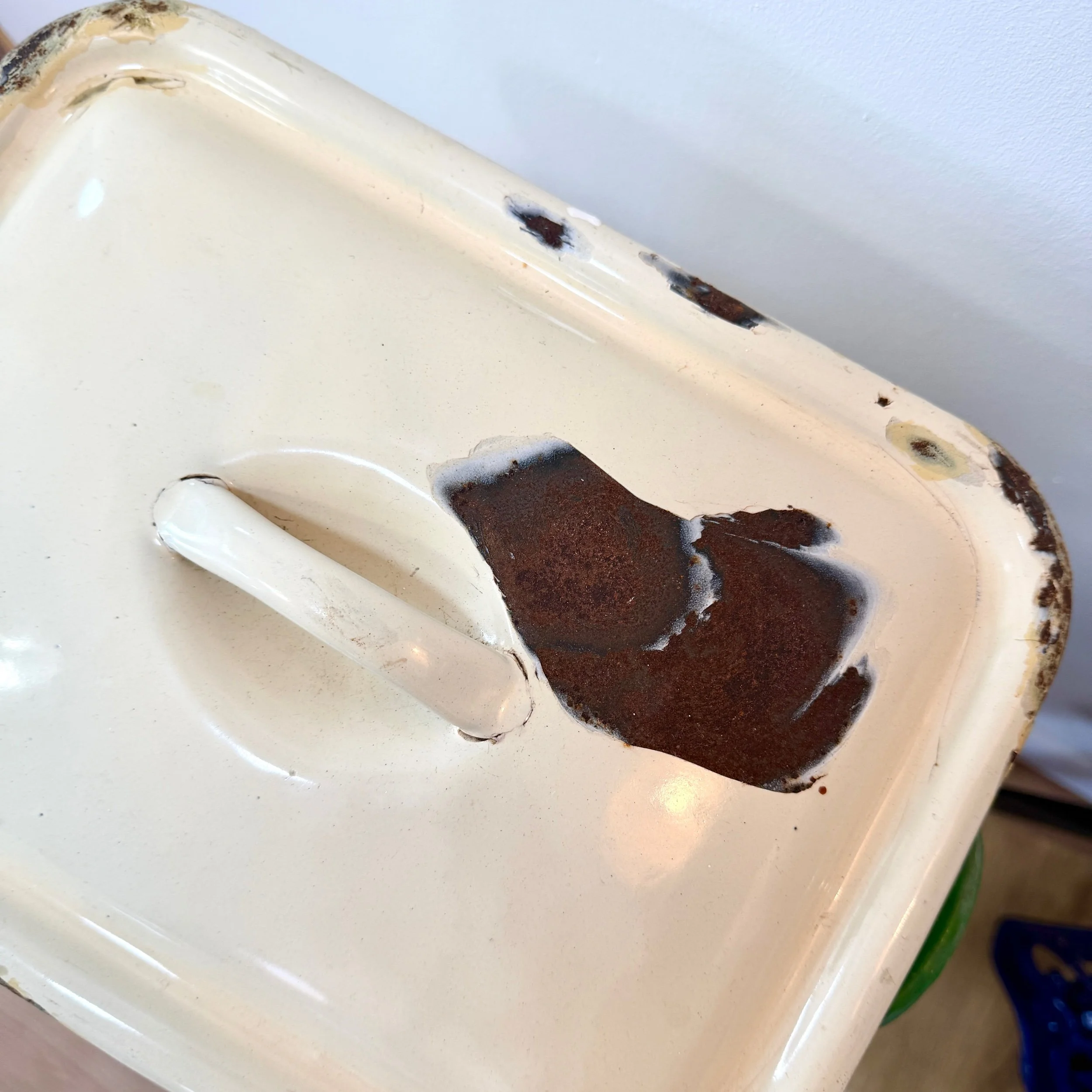
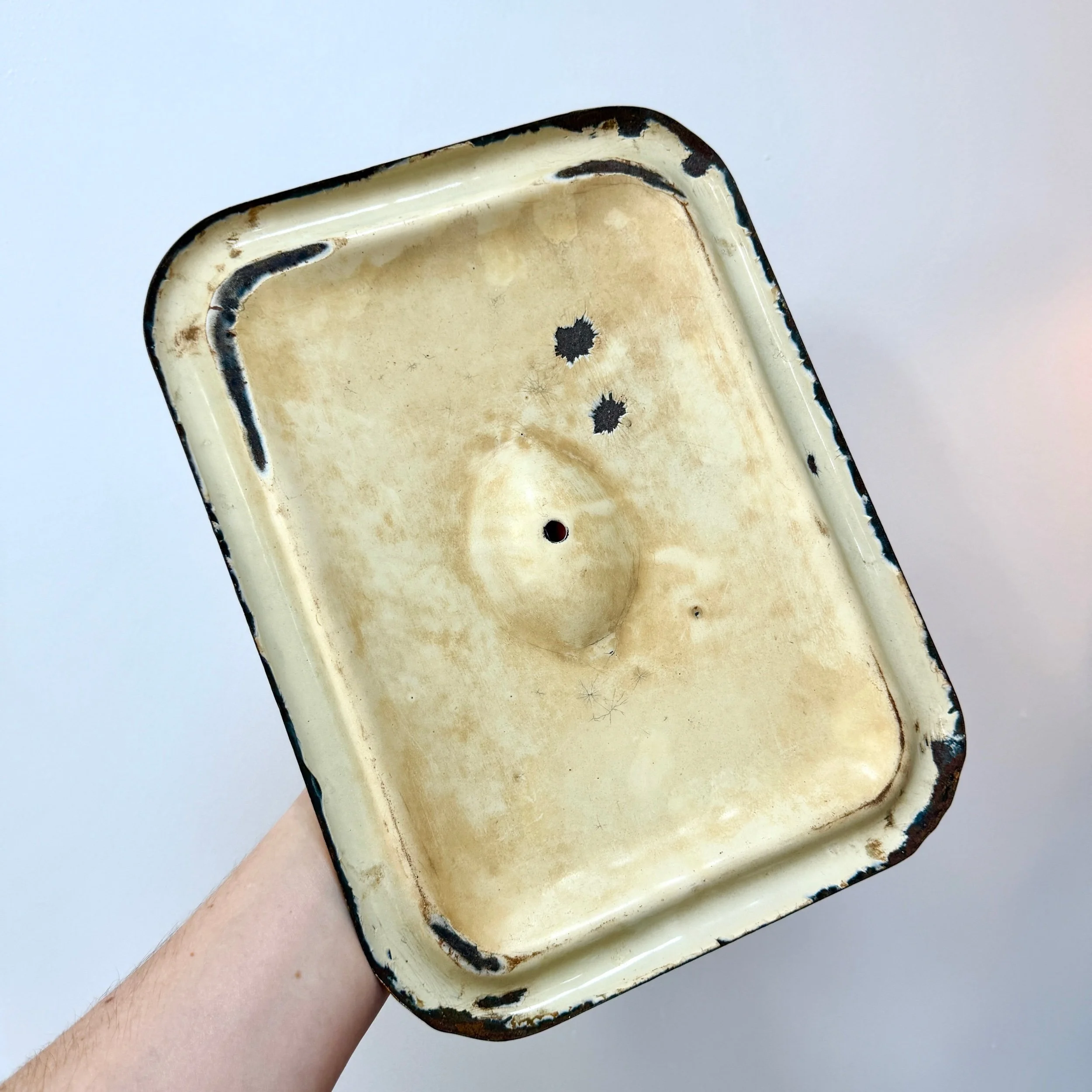
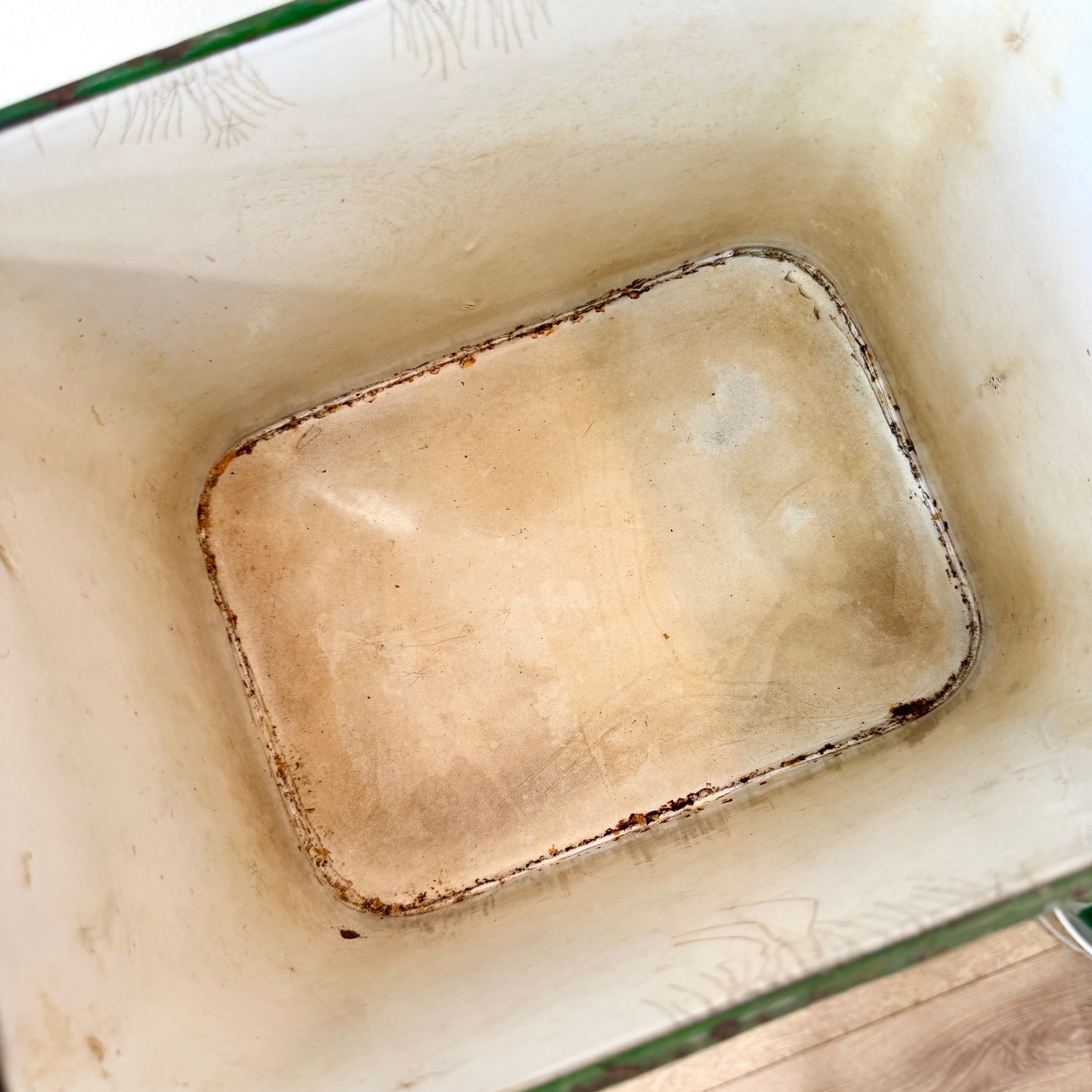
Honest vintage condition with obvious wear and lovely patina. Enamel chipping and rusting to the lid and rim edges, chips around the handle fixings, and staining and light rust to the interior — please see photos. Sold as a decorative and characterful piece.

MEASUREMENTS

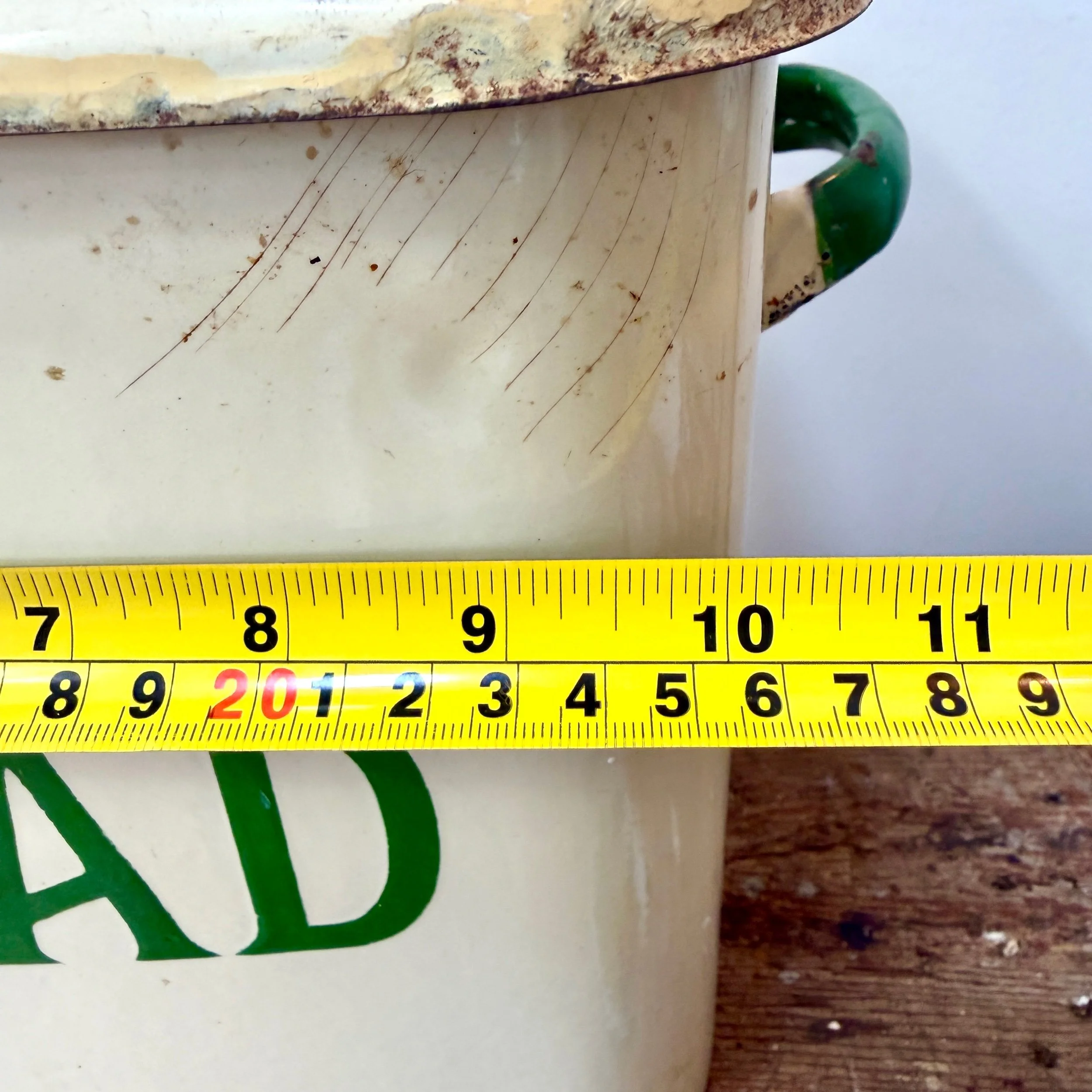
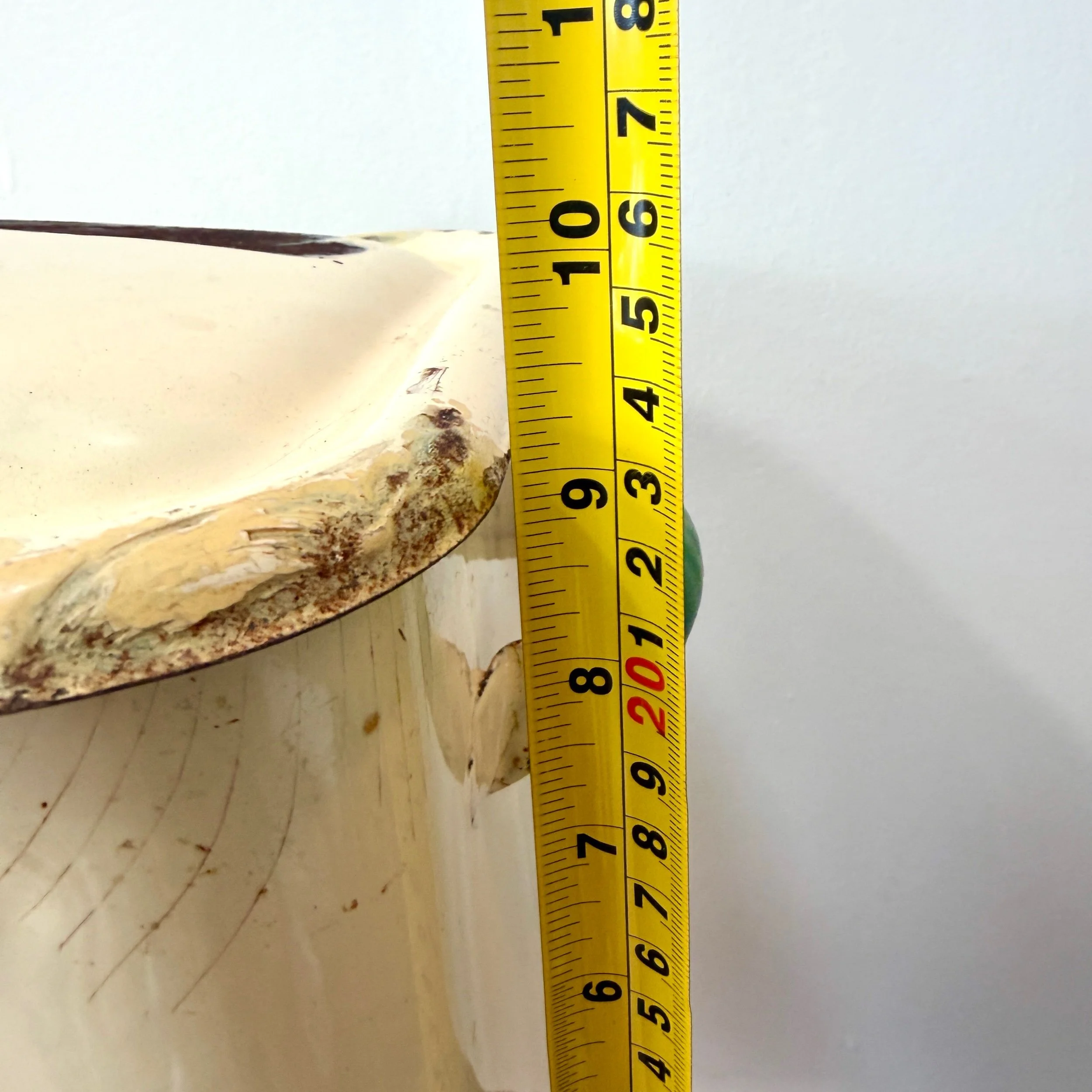
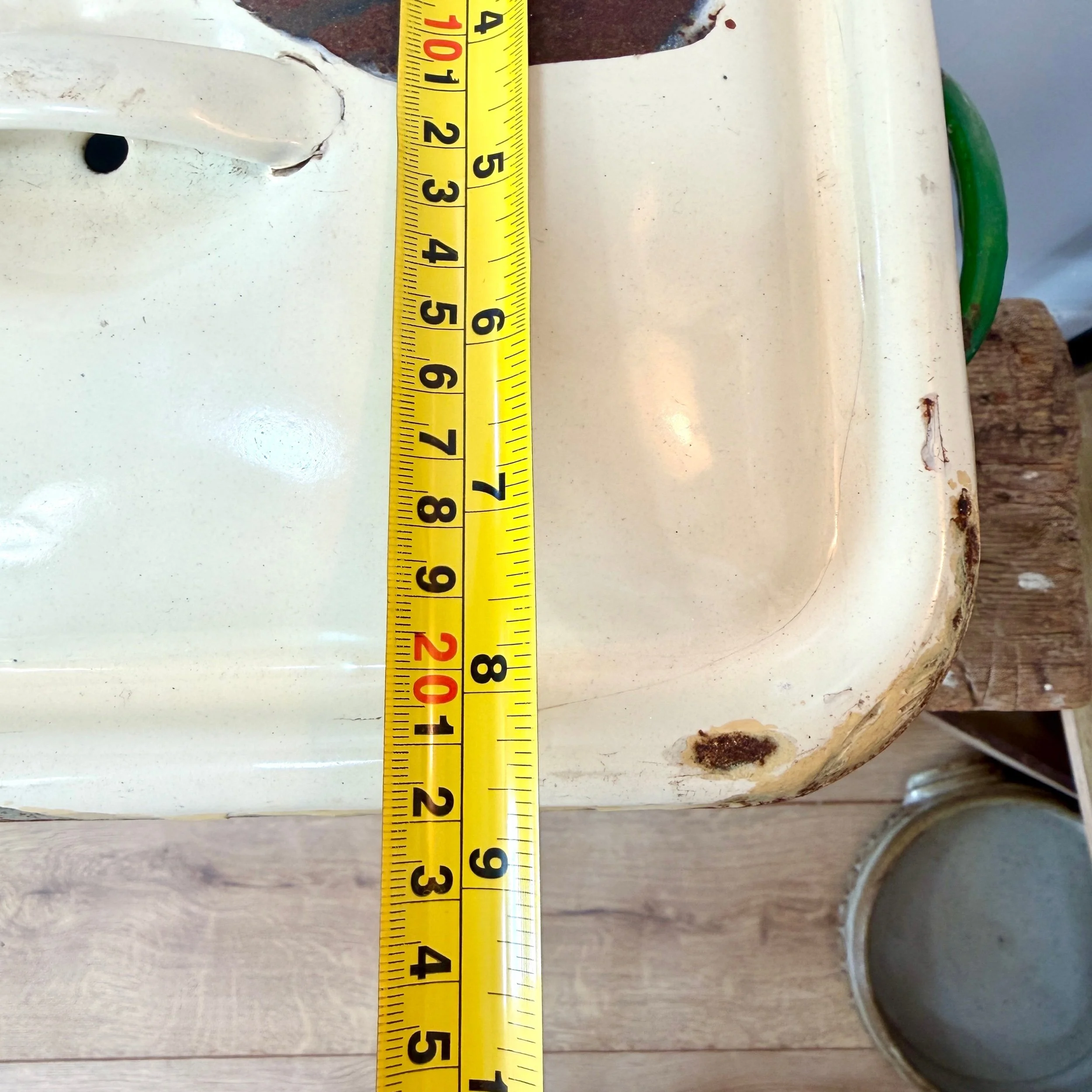
26 cm high x 23 cm wide x 22 cm deep (approx. 10.2 in x 9 in x 8.7 in)

CURIOUS FACT

The bread bin is younger than you’d think — and it exists because of a machine.

For most of history, bread didn’t need storing. It was baked at home or fetched warm from the baker that morning, kept in a stoneware crock or slung in a cloth from a beam, and eaten by nightfall. Then in 1928 an American jeweller called Otto Rohwedder perfected a machine that could slice and wrap a loaf — an invention so admired it gave us the phrase “the best thing since sliced bread.”

Suddenly bread came from a factory, arrived days old, and had a shelf life to worry about. The tin bin with a snug lid was the answer: air out, loaf soft, mice firmly on the other side. So a bin like this is really the moment bread stopped being something you made and became something you bought.

A classic vintage enamel bread bin in cream with green handles, bold serif BREAD lettering to the front and a lift-off lid with looped handle. This cream-and-green combination is one of the most recognisable palettes in English kitchenalia — the colours of a 1930s–50s scullery, and still the ones that make a kitchen feel instantly warm.

Beautifully worn, with chips and rust bloom to the rim and edges telling the story of decades of daily use. Use it as intended for bread, or as a handsome store for tea towels, utensils, dried flowers or kitchen odds and ends.

CONDITION

Honest vintage condition with obvious wear and lovely patina. Enamel chipping and rusting to the lid and rim edges, chips around the handle fixings, and staining and light rust to the interior — please see photos. Sold as a decorative and characterful piece.

MEASUREMENTS

26 cm high x 23 cm wide x 22 cm deep (approx. 10.2 in x 9 in x 8.7 in)

CURIOUS FACT

The bread bin is younger than you’d think — and it exists because of a machine.

For most of history, bread didn’t need storing. It was baked at home or fetched warm from the baker that morning, kept in a stoneware crock or slung in a cloth from a beam, and eaten by nightfall. Then in 1928 an American jeweller called Otto Rohwedder perfected a machine that could slice and wrap a loaf — an invention so admired it gave us the phrase “the best thing since sliced bread.”

Suddenly bread came from a factory, arrived days old, and had a shelf life to worry about. The tin bin with a snug lid was the answer: air out, loaf soft, mice firmly on the other side. So a bin like this is really the moment bread stopped being something you made and became something you bought.